
It feels good to see your website rank higher, a social media post receive hundreds of likes, or a video attract thousands of views. Those numbers can create excitement and make your marketing look successful.
But are they creating revenue?
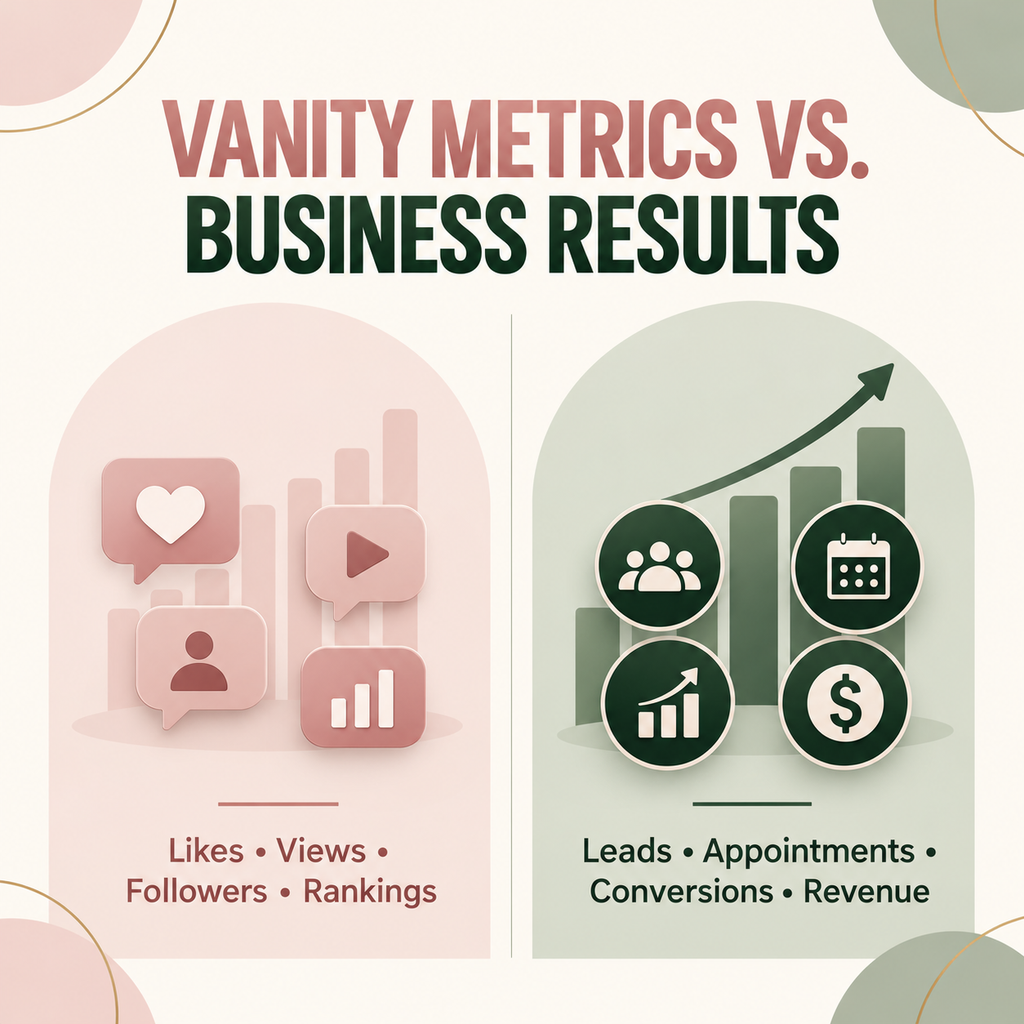
Rankings, views, likes, followers, and impressions are often vanity metrics. They may indicate that people are noticing your business, but they do not automatically mean those people are becoming customers.
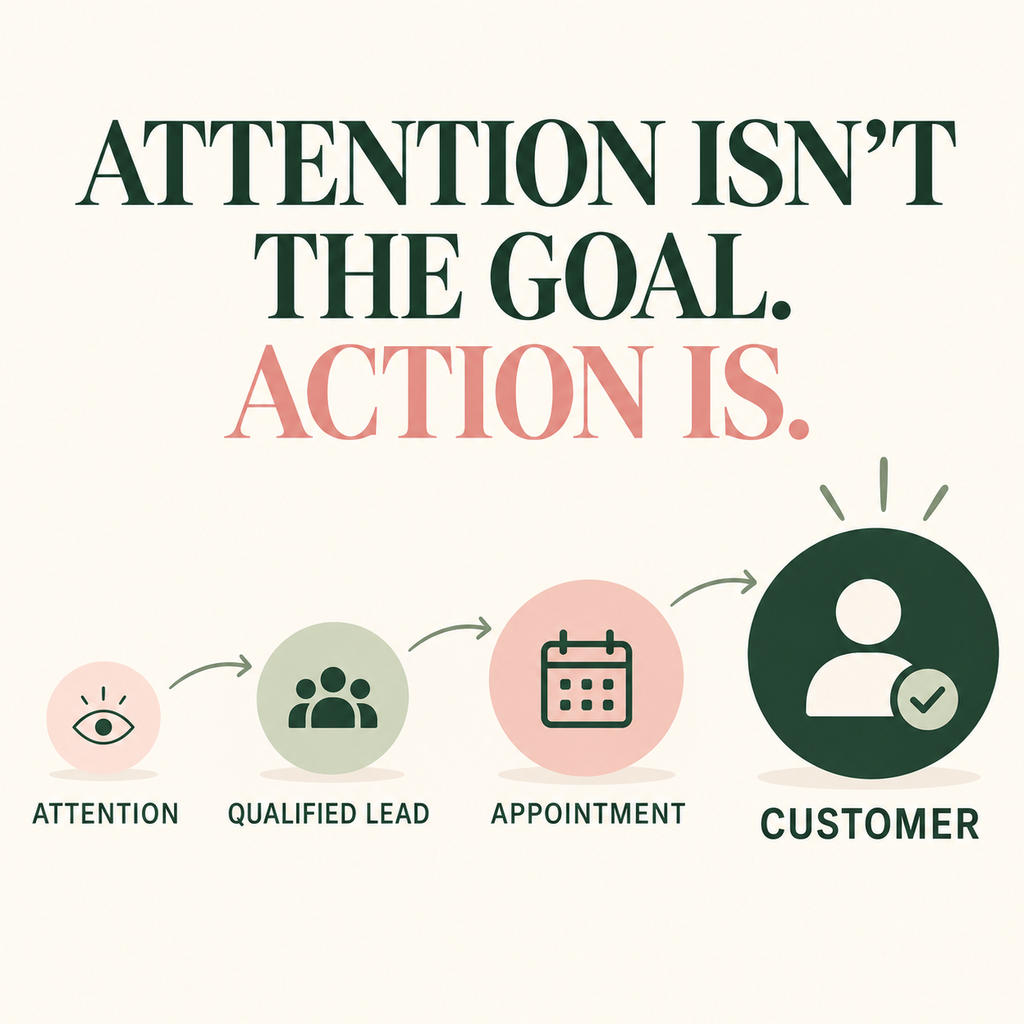
The real purpose of marketing is not simply to attract attention. It is to turn the right attention into leads, scheduled appointments, sales, and long-term business growth.
What Are Vanity Metrics?
Vanity metrics are numbers that appear impressive but do not necessarily demonstrate meaningful business results. Common examples include:
- Social media likes and followers
- Video views
- Website traffic
- Impressions and reach
- Email subscribers
- Keyword rankings
- Page-one Google positions
These metrics are not worthless. They can help you understand whether your marketing is gaining visibility. The problem begins when they become the primary measure of success.
A viral video may receive thousands of views without generating a single qualified lead. A website might rank first for a keyword that attracts people who will never purchase the company’s services. A business can accumulate followers who live outside its service area or have no need for what it offers.
Visibility matters—but only when it supports a larger business objective.
Keyword Rankings Are Not the Final Goal
SEO is frequently judged by how high a website ranks for selected keywords. Higher rankings can bring more visitors to your website, but rankings alone do not pay the bills.
A keyword is valuable only when it:
- Reflects the services you want to sell
- Reaches the right audience
- Matches a prospective customer’s intent
- Generates qualified website traffic
- Contributes to calls, forms, appointments, or sales
Ranking first for a broad, low-intent term may be less valuable than ranking fifth for a highly specific service keyword that consistently produces qualified leads.
Your SEO strategy should therefore connect rankings with conversions. Track what visitors do after they reach your website. Do they call, complete a contact form, request an estimate, schedule an appointment, or leave immediately?
The quality of the traffic matters far more than the size of the number shown in a ranking report.
A Viral Video Is Not Always a Successful Video
Going viral can expose your business to a large audience, but that audience may not include your ideal customers.
For example, a local home-service company does not benefit much from thousands of views originating outside its service area. A medical practice does not need attention from viewers who are unlikely to become patients. A law firm needs qualified inquiries—not entertainment views from people who have no need for its services.
A successful video should help the right viewer take a meaningful next step. That could include:
- Visiting a service page
- Requesting more information
- Calling the business
- Booking an appointment
- Downloading a resource
- Joining an email list
A video with 500 views and ten qualified leads may be far more valuable than a video with 100,000 views and no conversions.
Likes and Followers Do Not Equal Customers
A large following can strengthen credibility, but it does not guarantee revenue. Some businesses spend so much time trying to increase follower counts that they lose sight of why they are creating content.
Your social media strategy should be designed to attract, educate, and convert the people most likely to buy from you.
Instead of asking only, “How many people liked this post?” ask:
- Did the post reach the right audience?
- Did anyone visit the website?
- Did it generate messages or calls?
- Did it produce a qualified lead?
- Did it move an existing prospect closer to a decision?
- Did it help build trust with a potential customer?
Engagement is useful when it supports a customer journey. It should not be treated as the destination.
The Marketing Metrics That Matter Most
The most valuable metrics are closely connected to business growth.
Qualified leads
How many people contacted your business and genuinely needed your service? A high volume of poor-quality inquiries can waste time and distort your marketing results.
Conversion rate
What percentage of website visitors, ad clicks, or campaign recipients completed the desired action? Conversion tracking helps reveal whether your marketing is attracting the right people and giving them a compelling next step.
Appointments scheduled
For service businesses, law firms, medical offices, and private practices, appointment sets are one of the clearest indicators of marketing performance.
Cost per lead
How much are you spending to generate each qualified inquiry? This is especially important when evaluating paid advertising.
Lead-to-customer rate
How many qualified leads become paying customers? Marketing and sales should be measured together because generating leads has limited value if they do not turn into business.
Customer acquisition cost
How much does it cost to acquire a new customer after accounting for your marketing and sales expenses?
Revenue attributed to marketing
Which campaigns, channels, and services are contributing to actual revenue? This helps you invest more confidently in what is working.
Use Vanity Metrics as Clues, Not Goals
You do not need to ignore rankings, views, impressions, or engagement. Instead, put them in the proper place.
They are leading indicators that may help explain what is happening earlier in the customer journey. They can show whether your content is being discovered and whether your audience is paying attention. However, they should always be connected to a measurable business outcome.
A useful marketing report should not end with, “Your impressions increased by 40%.” It should explain what happened next:
- Did website visits increase?
- Did more visitors reach a service page?
- Did calls and form submissions improve?
- Were the leads qualified?
- Did more prospects schedule appointments?
- Did revenue grow?
That context turns marketing data into business intelligence.
Build Marketing Around Business Results
Before launching a campaign, define the result you want it to produce. That goal should guide the strategy, content, targeting, calls to action, and measurement.
If your goal is to schedule more appointments, your marketing plan might include:
- Targeting high-intent search terms.
- Improving your most important service pages.
- Strengthening your Google Business Profile.
- Creating educational content that addresses customer concerns.
- Adding clear calls to action.
- Tracking calls, forms, appointments, and lead quality.
- Reviewing which sources produce paying customers.
Every marketing activity should have a purpose beyond collecting attention.
Stop Chasing Numbers That Don’t Move the Business
You do not need the most followers, the most views, or the number-one ranking for every keyword. You need a strategy that connects visibility to action—and action to revenue.
The strongest marketing programs measure success by asking:
- Are we generating qualified leads?
- Are more people scheduling appointments?
- Are those appointments turning into customers?
- Is our marketing producing profitable growth?
Those are the numbers that matter.
Ready to Focus on Marketing That Produces Results?
Rose & Ripple Marketing creates strategies designed around meaningful business outcomes—not impressive-looking numbers without context. From SEO and website optimization to Google Ads, content, email marketing, social media, and Google Business Profile optimization, every effort is connected to your larger growth goals.
Contact Rose & Ripple Marketing to schedule a discovery call and build a marketing strategy focused on leads, conversions, appointments, and sustainable growth.